How Often for Air Duct Cleaning? 5 Signs Your Home is Overdue
The average American home accumulates enough airborne contaminants in its ductwork to fill a standard garbage bag every three to five years. Yet most homeowners can’t remember the last time—if ever—their air ducts received professional attention. Understanding proper cleaning frequency and recognizing warning signs can dramatically improve your indoor air quality and HVAC efficiency.

Understanding Air Duct Cleaning Frequency
The National Air Duct Cleaners Association (NADCA) recommends professional air duct cleaning every three to five years for most homes. However, this timeframe isn’t set in stone. Several factors influence how often your specific home needs attention.
Factors That Affect Cleaning Frequency
Your home’s unique circumstances play a major role in determining cleaning schedules. Here’s what impacts frequency:
- Pet ownership: Homes with furry friends need cleaning every 2-3 years due to pet dander and hair accumulation
- Smokers in the household: Tobacco smoke residue requires more frequent cleaning, typically every 1-2 years
- Family members with allergies or asthma: These homes benefit from cleaning every 2-3 years
- Recent home renovations: Construction dust necessitates immediate post-renovation cleaning
- Geographic location: Dusty climates or areas with high pollen counts may require more frequent service
- HVAC system age: Older systems often need more attention than newer, efficient models
New Home Considerations
Even new homes sometimes need initial duct cleaning. Construction debris, sawdust, and other building materials can accumulate in ductwork during the building process. If you’re experiencing dust issues in a newly constructed home, don’t assume the ducts are clean simply because the house is new.
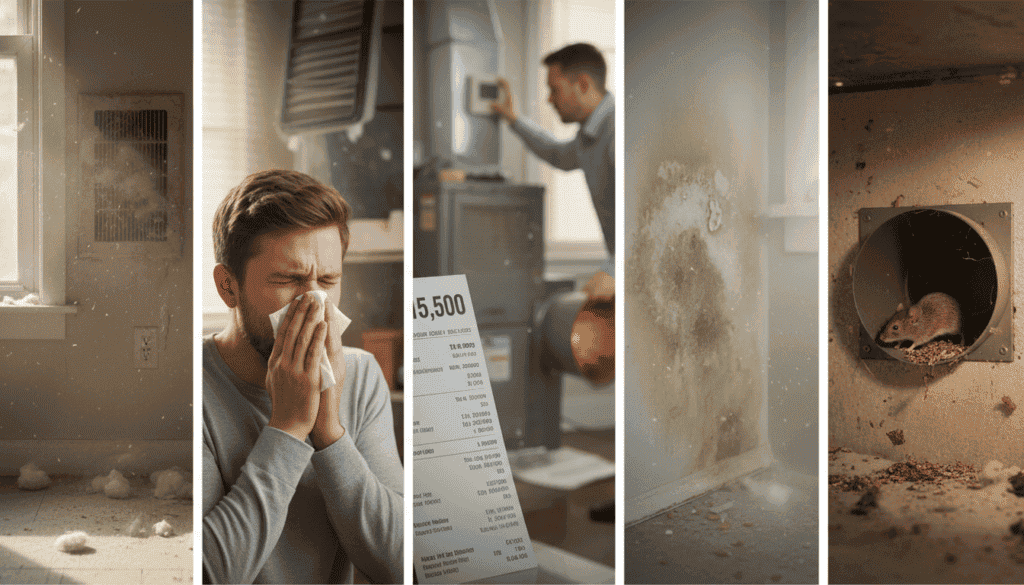
The 5 Critical Signs Your Home is Overdue for Air Duct Cleaning
1. Visible Dust and Debris Around Vents
This might surprise you, but visible accumulation around your vents is often the first sign homeowners notice. When dust consistently appears on vent covers despite regular cleaning, it indicates significant buildup within the ductwork itself.
Look for these specific indicators:
- Dark streaks or staining around supply vents
- Dust that reappears quickly after wiping vents clean
- Visible debris inside the vent openings
- Cobwebs forming around unused vents
The reality is that your HVAC system acts like a giant vacuum, constantly circulating air throughout your home. When ducts are dirty, this circulation spreads contaminants rather than cleaning the air.
2. Unexplained Increase in Energy Bills
Here’s what many homeowners miss: dirty ducts force your HVAC system to work harder. When debris restricts airflow, your system compensates by running longer cycles to reach desired temperatures.
Energy bill warning signs include:
- Gradual increases without changes in usage patterns
- Bills that seem high compared to similar-sized homes
- Significant seasonal spikes beyond normal expectations
- HVAC system running constantly without reaching set temperatures
According to the U.S. Department of Energy, dirty HVAC systems can increase energy consumption by up to 40%. Professional cleaning often pays for itself through reduced energy costs within the first year.
3. Persistent Musty or Stale Odors
Unpleasant odors that persist despite thorough house cleaning often originate from contaminated ductwork. These smells become particularly noticeable when the HVAC system starts running after being off for extended periods.
Common duct-related odors include:
- Musty smells indicating possible mold growth
- Stale, stuffy air that doesn’t improve with ventilation
- Pet odors that seem to come from vents rather than specific areas
- Chemical or paint smells from past renovations
Don’t ignore persistent odors. They often indicate more serious issues like moisture problems or biological growth within the ductwork.
4. Increased Allergy Symptoms or Respiratory Issues
Your indoor air quality directly impacts your family’s health. When ducts become contaminated, they continuously circulate allergens, dust mites, and other irritants throughout your living space.
Health-related warning signs include:
- Family members experiencing more frequent allergy symptoms at home
- Respiratory issues that improve when away from the house
- Increased asthma attacks or breathing difficulties
- Unexplained headaches or fatigue when spending time indoors
- Frequent colds or respiratory infections among household members
Here’s the thing: your home should be a refuge from outdoor allergens, not a source of additional irritants. Clean ducts help maintain the healthy indoor environment your family deserves.
5. Uneven Heating and Cooling Throughout the Home
Inconsistent temperatures often result from restricted airflow caused by debris buildup. When some ducts are more clogged than others, certain rooms receive inadequate air circulation.
Temperature inconsistency indicators:
- Rooms that are consistently too hot or too cold
- Weak airflow from certain vents
- HVAC system struggling to maintain set temperatures
- Some areas feeling stuffy while others have good air circulation
- Significant temperature variations between floors or room sections
Professional duct cleaning often resolves these issues by restoring proper airflow throughout your home’s ventilation system.

What Happens During Professional Air Duct Cleaning
Understanding the cleaning process helps you make informed decisions and know what to expect from professional services.
Initial Inspection and Assessment
Reputable companies begin with detailed system inspection using specialized cameras and tools. This assessment identifies problem areas, determines cleaning scope, and provides accurate pricing without surprises.
The inspection typically includes:
- Visual examination of accessible ductwork
- Camera inspection of internal duct conditions
- Assessment of HVAC system components
- Identification of any damage or needed repairs
The Cleaning Process
Professional cleaning involves several coordinated steps using specialized equipment:
- System preparation: Technicians seal vents and prepare access points
- Negative pressure creation: Powerful vacuum systems create suction throughout the ductwork
- Agitation and removal: Brushes, air whips, and other tools dislodge debris while vacuum systems capture contaminants
- Component cleaning: Supply and return vents, registers, and accessible components receive individual attention
- Final inspection: Post-cleaning camera inspection verifies thorough cleaning
DIY vs. Professional Cleaning: Making the Right Choice
While some maintenance tasks are suitable for homeowners, air duct cleaning requires specialized equipment and expertise for effective results.
What Homeowners Can Do
Regular maintenance helps extend time between professional cleanings:
- Change HVAC filters regularly (every 1-3 months)
- Keep vents and registers clean and unobstructed
- Vacuum around vent openings during regular house cleaning
- Maintain proper humidity levels to prevent mold growth
- Schedule regular HVAC system maintenance
Why Professional Service Matters
Most businesses miss this, but effective duct cleaning requires more than basic vacuum equipment. Professional services provide:
- Powerful truck-mounted or portable vacuum systems creating proper negative pressure
- Specialized brushes and agitation tools designed for ductwork
- Camera equipment for inspection and verification
- Knowledge to identify and address underlying issues
- Proper containment to prevent spreading contaminants during cleaning
Choosing the Right Air Duct Cleaning Company
Not all duct cleaning companies provide equal service. Here’s what to look for when selecting a professional service provider.
Essential Qualifications and Certifications
Reputable companies demonstrate their commitment to quality through proper credentials:
- NADCA (National Air Duct Cleaners Association) membership
- Proper licensing and insurance coverage
- Trained and certified technicians
- Positive customer reviews and references
- Transparent pricing without hidden fees
Red Flags to Avoid
Be cautious of companies that:
- Offer prices significantly below market rates
- Use high-pressure sales tactics or door-to-door solicitation
- Claim cleaning will solve all indoor air quality problems
- Refuse to provide references or proof of insurance
- Don’t offer pre-cleaning inspection
Questions to Ask Potential Service Providers
Before hiring any company, ask these important questions:
- Are you NADCA certified?
- Can you provide references from recent customers?
- What does your cleaning process include?
- Do you provide before and after photos or video?
- What equipment do you use?
- Is your pricing transparent with no hidden fees?
- Do you guarantee your work?

Cost Considerations and Return on Investment
Understanding the financial aspects of air duct cleaning helps you budget appropriately and recognize the value of quality service.
Typical Pricing Factors
Several factors influence cleaning costs:
- Home size and number of vents
- Ductwork accessibility and layout
- Level of contamination
- Additional services (dryer vent cleaning, sanitizing treatments)
- Geographic location and local market rates
Long-term Benefits and Savings
Professional duct cleaning provides multiple financial benefits:
- Reduced energy costs through improved HVAC efficiency
- Extended HVAC system lifespan
- Fewer repair calls and maintenance issues
- Improved indoor air quality potentially reducing health-related expenses
- Enhanced home value and marketability
Maintaining Clean Ducts Between Professional Services
Proper maintenance extends the benefits of professional cleaning and helps you get the most value from your investment.
Regular Filter Maintenance
Your HVAC filter is your first line of defense against airborne contaminants. Here’s what works:
- Check filters monthly and replace when dirty
- Use high-quality filters appropriate for your system
- Consider upgrading to HEPA or high-efficiency filters if your system can handle them
- Keep spare filters on hand for timely replacements
Environmental Controls
Managing your home’s environment helps prevent rapid re-contamination:
- Control humidity levels between 30-50%
- Use exhaust fans in bathrooms and kitchens
- Keep pets groomed to reduce dander
- Address water leaks promptly to prevent mold growth
- Minimize indoor smoking or eliminate it entirely
Seasonal Considerations
Different seasons present unique challenges for ductwork cleanliness:
- Spring: Increased pollen and allergens
- Summer: Higher humidity and potential mold growth
- Fall: Dust from heating system startup
- Winter: Dry air and increased indoor time
Special Situations Requiring Immediate Attention
Certain circumstances necessitate immediate professional duct cleaning regardless of your regular schedule.
Post-Renovation Cleaning
Home improvements generate significant dust and debris that can contaminate your entire HVAC system. Always schedule duct cleaning after major renovations, especially those involving:
- Drywall work or texturing
- Floor refinishing or carpet installation
- Kitchen or bathroom remodeling
- Painting or wallpaper removal
Water Damage and Mold Issues
Water intrusion into ductwork creates ideal conditions for mold growth. Schedule immediate professional attention if you discover:
- Standing water in ducts
- Visible mold growth in or around vents
- Musty odors suggesting microbial growth
- Recent flooding or significant water damage
Pest Infestations
Rodents, insects, or other pests in ductwork require professional removal and sanitization. Signs include:
- Droppings or nesting materials in vents
- Scratching or scurrying sounds from ducts
- Pet behavior indicating animals in walls or ducts
- Unpleasant odors from decomposing pests

The Health Benefits of Clean Air Ducts
Understanding the health implications of clean ductwork motivates proper maintenance and helps justify the investment in professional services.
Respiratory Health Improvements
Clean ducts contribute to better respiratory health by:
- Reducing airborne allergens and irritants
- Minimizing exposure to dust mites and their waste products
- Eliminating mold spores and bacterial contaminants
- Improving overall indoor air quality
Benefits for Vulnerable Populations
Certain family members benefit especially from clean ductwork:
- Children with developing respiratory systems
- Elderly family members with compromised immunity
- Anyone with asthma, allergies, or chronic respiratory conditions
- Individuals recovering from illness or surgery
Technology and Innovation in Duct Cleaning
The duct cleaning industry continues evolving with new technologies and methods that improve cleaning effectiveness and customer experience.
Advanced Inspection Tools
Modern companies use sophisticated equipment for accurate assessment:
- High-definition cameras for detailed internal inspection
- Robotic crawlers for accessing difficult areas
- Air quality testing equipment
- Moisture detection tools
Improved Cleaning Methods
New cleaning technologies provide more thorough results:
- Powerful truck-mounted vacuum systems
- Compressed air cleaning tools
- Antimicrobial treatments and sanitizers
- HEPA filtration for captured contaminants
Conclusion
Regular air duct cleaning isn’t just about maintenance—it’s about protecting your family’s health, maximizing your HVAC investment, and ensuring your home remains a comfortable sanctuary. Most homes benefit from professional cleaning every three to five years, but don’t wait if you’re experiencing any of the five warning signs we’ve discussed.
The key is working with a company that prioritizes quality and transparency. When you’re ready to improve your home’s air quality, look for certified professionals who provide honest assessments and clear pricing without hidden surprises.
At Texan Cleaners, we understand that your home’s air quality directly impacts your family’s wellbeing. Our quality-first approach and transparent pricing ensure you receive exceptional service at a fair price. Don’t let contaminated ducts compromise your indoor air quality—contact us today for a professional assessment and experience the difference that honest, expert service makes.