
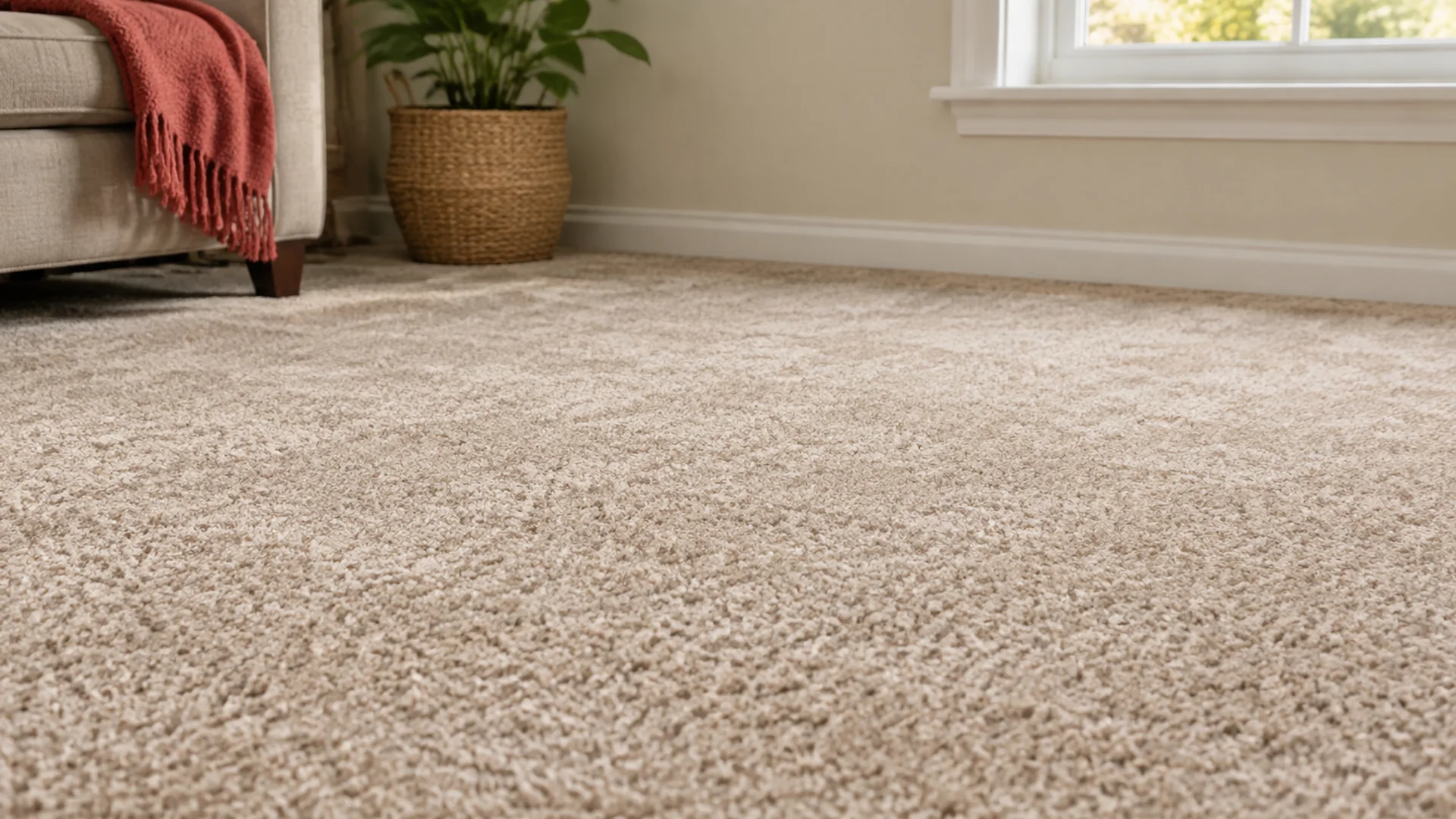
Crayon on carpet can leave both loose wax and a colored mark. Start by removing what lifts easily, then check the carpet and the crayon manufacturer's instructions before choosing a cleaner.
Keep heat, sharp scraping and improvised solvents out of the first response. The goal is to avoid spreading the wax or damaging the pile while you work out what treatment is suitable.
Identify the Crayon and the Carpet
Keep the crayon wrapper or packaging if you have it. Regular wax crayons and washable art products do not necessarily have the same cleaning instructions. Also check the carpet's material and care guidance.
For example, Crayola publishes a specific procedure for its Ultra Clean and Washable Crayons on carpet. That page is for those products; it is not permission to apply the same procedure to every crayon or every rug.
Lift Loose Pieces Carefully
Use the rounded edge of a spoon to lift loose crayon without cutting or pulling the fibers. Work gently and stop if the wax is smeared into the pile rather than lifting away. Pick up loose fragments so they are not walked into the surrounding carpet.
Avoid a sharp knife, vigorous brushing or repeated scraping of the colored area. Once the easy pieces are gone, more scraping may do more harm than good.
Test a Compatible Treatment First
Choose a procedure that is permitted by the carpet's care instructions and appropriate for the art product. Test any recommended cleaner in an inconspicuous area before treating the visible mark.
Check for color transfer, discoloration or a texture change. If you see a change, stop. An unfamiliar fiber, a valuable rug or an unknown dye is a good reason to ask for advice before continuing.
Keep the Treatment Controlled
Apply only the amount directed by the approved procedure and avoid soaking the backing. Use a clean white cloth to monitor color transfer where blotting is appropriate. Remove cleaner residue as instructed and allow the area to dry.
Do not use a hot iron, hair dryer, carpet dye kit or a sequence of household solvents as a general crayon-removal method. Heating and recoloring are not routine spot-cleaning steps for a homeowner. A stubborn mark needs assessment, not an increasingly aggressive experiment.
Recheck the Dry Carpet
Look at the dry area in ordinary light. Notice whether there is still raised wax, a colored mark, or a change in the fibers themselves. These observations help explain the remaining problem.
Avoid repeating treatment indefinitely. Save the product details and take a photograph before contacting a cleaner. Tell us if heat or another chemical was already used, even if it seemed to have little effect.
If a permitted treatment leaves the area damp, the carpet-drying guide covers aftercare questions without relying on concentrated heat or a fixed drying promise.
Ask About a Remaining Mark
Our carpet and area rug cleaning service can discuss whether further cleaning is suitable for the material and condition. Share the crayon type, the size of the affected area and the treatments already tried. A realistic estimate should explain the proposed work without a promise that every pigment or texture change can be reversed.