
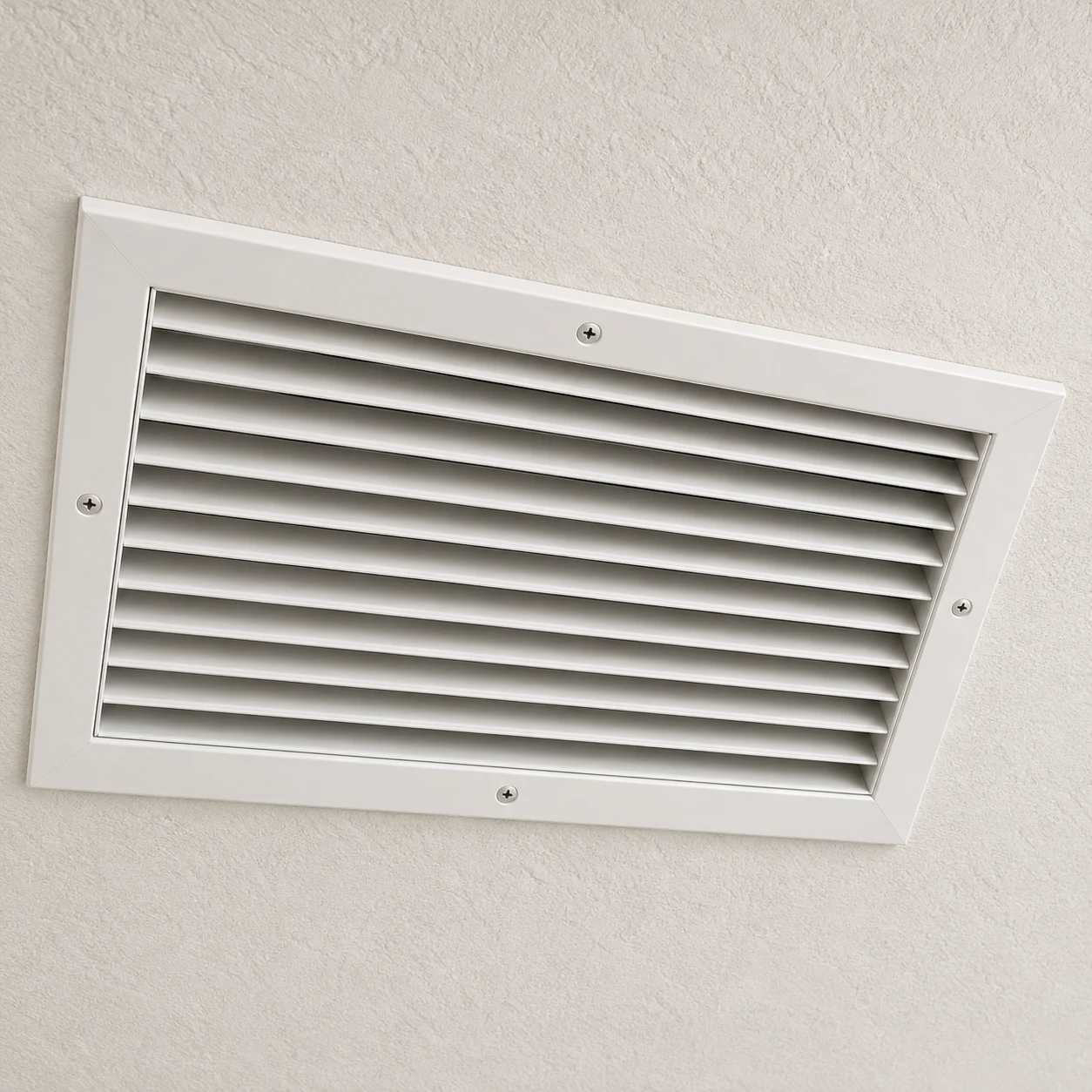
An odor near an air vent calls for an explanation of the source, not a stronger fragrance. Essential oils, herbs and household powders do not establish what is causing the smell or whether a duct-cleaning visit is appropriate.
If you searched for a natural way to remove an odor, start with observation and ordinary household care outside the system. Do not pour, sprinkle or spray scents, baking soda, vinegar or other cleaning chemicals into air ducts or equipment.
Describe the odor without guessing its cause
Record where the smell is noticeable, when it appears and whether the heating or cooling system is operating. Does it affect one room or several? Did it begin after building work, a leak, a filter change or another event you can identify?
These observations help explain the concern. They do not prove that dust, mold or another particular substance inside the ducts is responsible. A musty description alone is not a diagnosis, and a photograph cannot answer every question about hidden material.
Do not reach into an opening, enter an inaccessible space or disturb insulation to investigate. Tell the relevant provider about known moisture, visible damage, suspected growth or pests before arranging ordinary cleaning. The right next step may be a qualified equipment, building or other specialist assessment.
If you believe there is an immediate hazard, seek the appropriate emergency or qualified professional response. Do not use a routine cleaning inquiry to investigate an urgent problem.
For suspected growth or a known water incident, our duct mold guide separates observations from identification and explains why moisture needs its own assessment.
Separate removing a source from covering a smell
Adding a scent changes what you notice. It does not demonstrate that a source has been identified or removed. A nicer smell after using a diffuser or scented product is not proof that the ducts are clean.
Keep ordinary housekeeping outside the system distinct from duct treatment. If a known room item is responsible for an odor, follow that item's care instructions. If you do not know the source, record the pattern and ask for an appropriate assessment rather than applying a remedy to every vent.
We do not promise that a cleaning or deodorizing treatment will remove every odor. A service recommendation should explain the task it can address and any concern it cannot resolve.
Why “natural” does not establish suitability for ducts
Do not treat a kitchen ingredient, essential oil or herb as an approved duct-cleaning material. A product used elsewhere in the home is not automatically suitable for ductwork, filters or heating and cooling equipment.
Do not hang scented sachets on openings, put oils on filters or add powders and liquids inside the system as an odor remedy. Do not wash concealed duct surfaces with water or vinegar. If you already used a substance, keep its name or container information and tell the provider where it was applied.
The EPA's guide to air duct cleaning cautions about proposed chemical treatments and methods involving moisture. It does not provide a household scent recipe for duct odors. Its discussion supports asking about material and method suitability rather than improvising a treatment.
What to ask before accepting a treatment
If a provider proposes a product, ask:
- What observed condition is the treatment intended to address?
- Which material and part of the system would receive it?
- How has suitability for that use been established?
- Is the treatment part of the estimate, and what would it add to the price?
- Does a moisture, damage or other underlying concern need a different assessment first?
You should be able to understand the proposal before agreeing. A claim that a product is natural or smells fresh does not answer those questions. Neither does a promise that every odor will disappear.
Where ordinary duct cleaning fits
If the proposed task is cleaning suitable duct areas, ask about the included components, access and collection of debris. Review the scope separately from a repair, an equipment assessment or work on suspected mold. We do not offer standalone mold testing, clearance or regulated remediation through our cleaning package.
For San Antonio homes, our air duct cleaning service explains the current offer and estimate questions. Tell us the odor pattern and any known water exposure or products used before assuming that the standard package is the answer. We will discuss the cleaning request and whether another kind of assessment needs to come first.
Keep a record if the smell returns
Record when and where it recurs, including any relationship to system operation or household activities. Share the earlier work and treatments when seeking further advice. A returning smell is a reason to revisit the source question, not automatically to add more deodorizer or buy another cleaning.
Follow the equipment manufacturer's normal care instructions. Keep medical concerns with a qualified healthcare professional; an odor discussion cannot diagnose a condition or establish an individual health risk. The goal is a suitable next step based on the concern you actually have.