
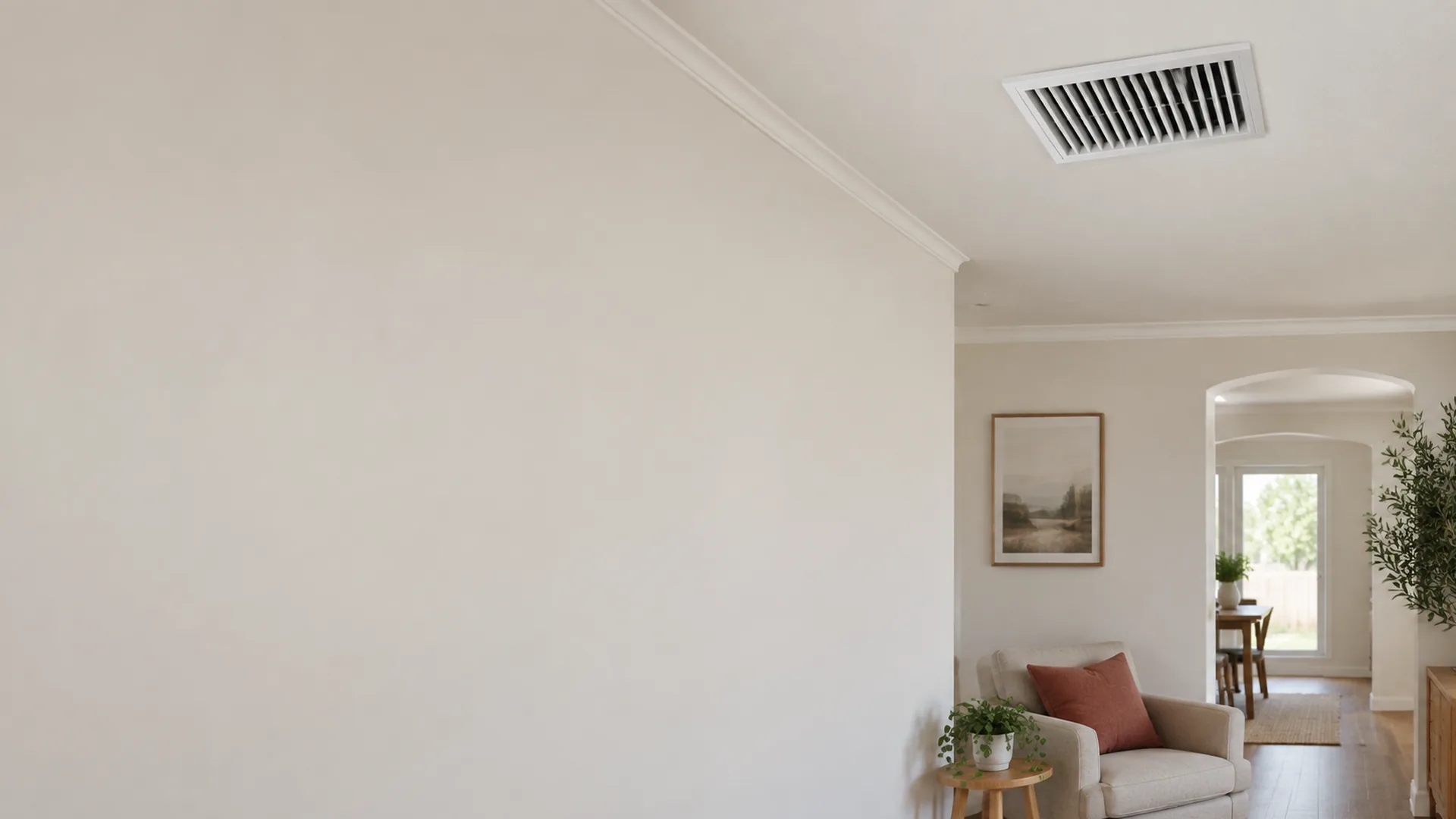
Household dust can come from more than one source, so a dusty room does not automatically point to the air ducts. Start by noticing where dust collects, how quickly it returns and what is happening in the home.
A useful plan separates ordinary housekeeping from problems that need HVAC or building maintenance. That keeps the response specific and avoids paying for a service simply because it was presented as the cure for every dusty surface.
Look for a Pattern
Check whether the dust appears mainly at an entrance, near a fabric surface, after a home project or around a particular register. Compare a busy room with a less-used space. Note the timing before changing several things at once.
Take photographs if debris seems to be coming from a vent. Dust sitting on the outside of a grille is different from particles visibly emerging while the system runs. An observation is more useful than a blanket statement that the whole system is dirty.
Keep Tracked-In Dirt Under Control
Use suitable entrance mats and clean them regularly. Arrange outdoor shoes where they will not obstruct access. Vacuum or clean the entrance floor using a method suitable for its material.
Check the route from a pet door, garage or outdoor seating area as well as the front door. Concentrating on the actual entry route can make the routine more manageable than repeatedly cleaning every room the same way.
Include Fabrics and Missed Edges
Vacuum suitable carpet, accessible upholstery and carpet edges with the correct attachments. Follow labels for pet bedding, curtains and removable covers. Do not assume that every fabric can be washed or wet-cleaned.
Clean reachable surfaces with a method appropriate to the finish. Avoid dry sweeping or vigorous brushing where it spreads loose debris into the room. Water is not suitable for every electronic device, wood finish or decorative surface.
Check Filter Care and Airflow Questions
Follow the HVAC manufacturer's filter requirements and maintenance instructions. A dirty filter, a poorly fitted filter and an incompatible replacement are different issues to raise with an HVAC professional.
Do not block registers, insert objects into ducts or spray a cleaner into the system. If the concern involves ventilation or system performance, describe it to the appropriate service provider instead of treating the grille as the whole problem.
Use Air Cleaning With Realistic Expectations
The EPA's household air-cleaner guidance explains that filtration has limits. A portable cleaner is a separate equipment choice, not a reason to ignore a known source of dirt or an unresolved maintenance issue.
Before buying a device, work out which room and concern you are trying to address. Follow its sizing, placement and filter-maintenance instructions. Avoid expecting a room to stay permanently dust-free.
When material appears at an opening, our guide to how ducts get dirty explains the distinction between a grille deposit, possible entry routes and what remains unknown.
Do Not Use a Universal Duct-Cleaning Schedule
The EPA does not recommend routine duct cleaning as a general response to household dust; its duct-cleaning guidance describes an as-needed decision. Cleaning the ducts is not a guaranteed health intervention or a promise that dust will stop returning.
If you have a specific duct concern, our air duct cleaning page explains the service and estimate questions. Tell us what you can observe, the system access and what maintenance has already been done so the conversation stays focused on the actual issue.